

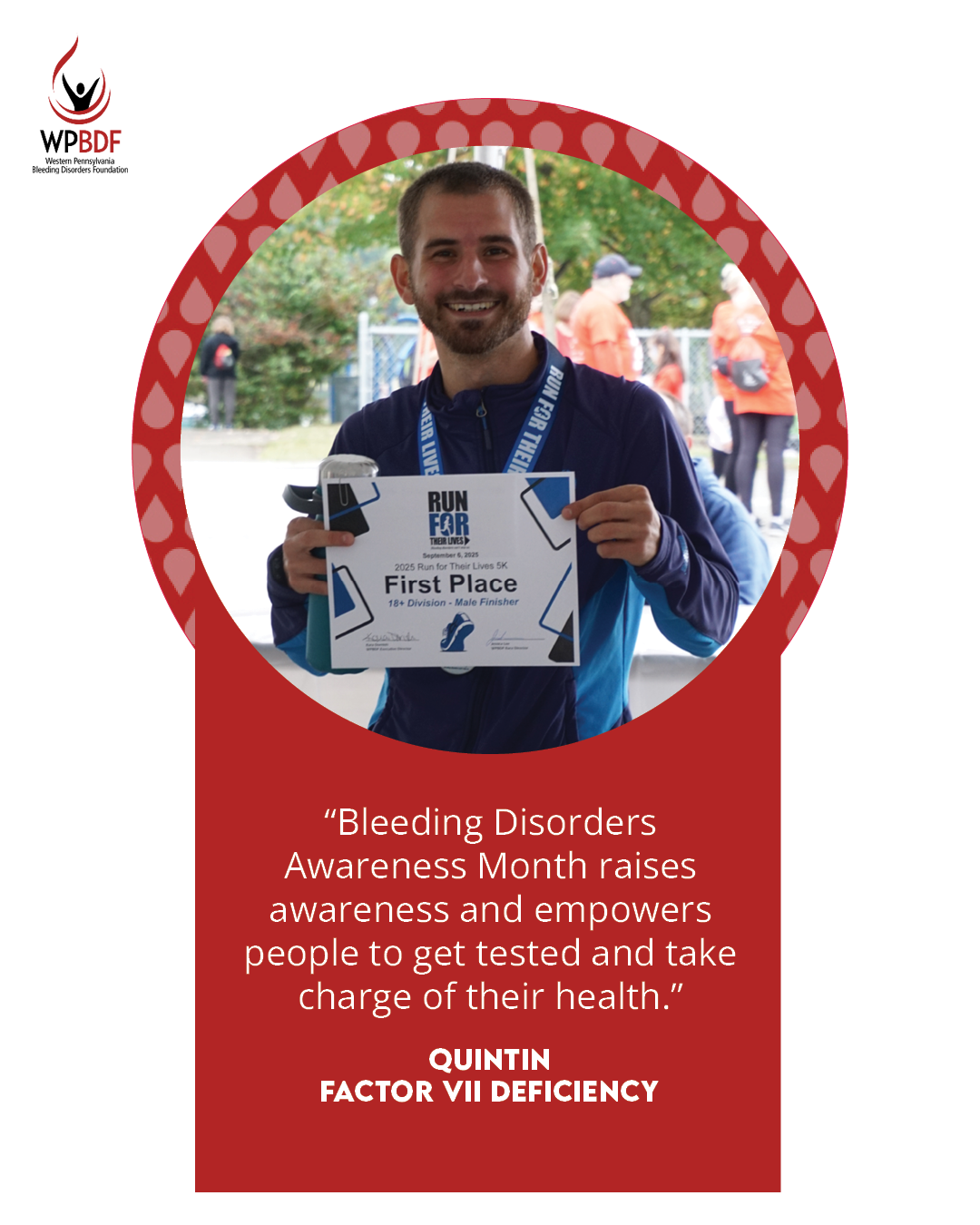
Quintin has always lived an active lifestyle. From the age of seven, he played multiple sports, including football, baseball, and basketball. Like most kids, he took his fair share of tumbles and hits, but he always got back in the game.
At 17, Quintin had his tonsils removed, but what seemed like a routine outpatient procedure quickly turned serious. Later that evening, he hemorrhaged and couldn’t stop the bleeding. Quintin recalls the frightening drive to the emergency room, holding a trash can as the bleeding continued. When the first ER was unable to stop it, he was rushed by ambulance to Children’s Hospital of Pittsburgh, where he underwent emergency surgery. By that point, Quintin had lost a significant amount of blood and required a transfusion.
At this time, Quintin did not have his bleeding disorder diagnosis, and with no known family history, it would be another six years before he received answers.
“They never found my bleeding disorder before or after my tonsillectomy. When I received my diagnosis, I was shocked and questioned why I hadn’t been diagnosed sooner,” he said.
At age 24, Quintin met with a different doctor for a procedure. Fortunately for him, this doctor noticed something unusual in his medical history. The severe bleeding after his tonsillectomy raised a red flag, and the doctor refused to proceed with surgery until he was tested. Quintin was tested for a bleeding disorder at the age of 24 and was diagnosed with Factor VII deficiency. He was eventually referred to the Hemophilia Center of Western Pennsylvania for continued care.
“Finally receiving a diagnosis allowed me to learn more and ensure I brought it to the attention of my PCP and surgeons. It also connected me with a supportive, knowledgeable community that offered both encouragement and practical guidance,” Quintin said.
Despite the shock of his diagnosis, Quintin hasn’t let it slow him down. He runs daily, enjoys frequent hikes, and stays active. He wears his medical alert bracelet and keeps plenty of bandages on hand, prepared for any minor injury. Understanding his condition has helped him better listen to his body and promote natural healing through a healthy lifestyle.
For Quintin, Bleeding Disorders Awareness Month is a powerful reminder of how important early diagnosis and access to treatment can be.
“Bleeding disorders are often overlooked and can be very serious. You can go into surgery without knowing and face complications,” he said. “Bleeding Disorders Awareness Month raises awareness and empowers people to get tested and take charge of their health.”
Stories like Quintin’s highlight why awareness, education, and access to care matter. By supporting the Western Pennsylvania Bleeding Disorders Foundation (WPBDF), you help ensure individuals and families in our community have the resources, education, and support they need to live healthy lives. Donate today to help us continue this important work.
Donate today at: https://wpbdf.org/donate/